Widest 9:16 crop of a 16:9 frame, in source pixels, for a clip 1,080 wide
YouTube videos at the resolution you have
Video pages are fetched at up to 720p. An uploaded file keeps its own resolution, for a sharper crop.

YouTubeclip maker
Paste a link to one of your YouTube videos and get back the moments worth posting as Shorts, Reels and TikToks, each framed vertically and captioned. Or upload the original file, for the sharpest picture.
Your first 2 videos are free, up to 1 hour each. No credit card required.
Yes. Paste a link to a public YouTube video you own or may use, or upload the file. Snipri reads the transcript for moments that make sense on their own, reframes them to 9:16 and captions every word. Links are fetched at up to 720p and up to 1 hour long, and an upload keeps its own resolution.
Recordings can be in any of 25 languages, chosen when you add the video or detected automatically.
A physics lecture its author published on YouTube, as Snipri reframed it: the lecturer moves along the board and the window follows, so the vertical clip keeps them in frame. On the left, the lime frames are what the clip shows and each face Snipri tracks carries its share of the frame's height; on the right plays the clip it rendered.
Recording: “Lecture 6 part 3” by Physics 7B UC Davis, from the YouTube UGC dataset, under CC BY 4.0, cut, without sound and with Snipri’s framing drawn over it. The logo on a laptop's lid was painted out before Snipri reframed it. The clip is Snipri’s render, scaled down and not retouched.
15 to 60s
Clip length by default, or choose 10 to 30s, 30 to 60s, 60 to 90s or 90s to 3 min
Up to 10
Clips from each job
1080×1920
Vertical by default; square or landscape in the editor
Editable
Word-level captions, restyled any time after export
43 min
Usual wait for your clips
2 videos
Free to start, up to 1 hour each, no credit card
Three steps, and no editing skills needed.
Add a video
Video links up to 1 hour
A few clicks
Paste a link to one public YouTube video or Short, or upload the file for full resolution, or pick it from Dropbox or Google Drive.
Selecting highlights
about 4 min leftfireside-chat.mp4
Hiding this won't stop the job. It keeps processing and will show up in My Clips when it's done.
About 43 minutes
The transcript is read for moments that make sense without the rest of the video. Weak ones are dropped, not padded in.
7 clips ready
From fireside-chat.mp4
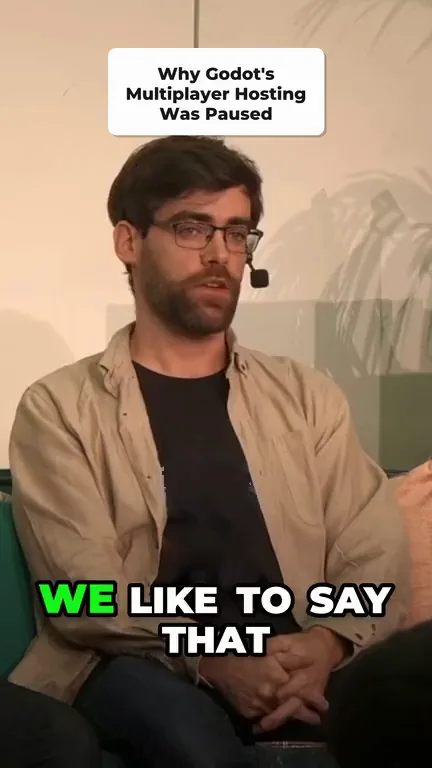 Why Godot's Multiplayer Hosting Was Paused
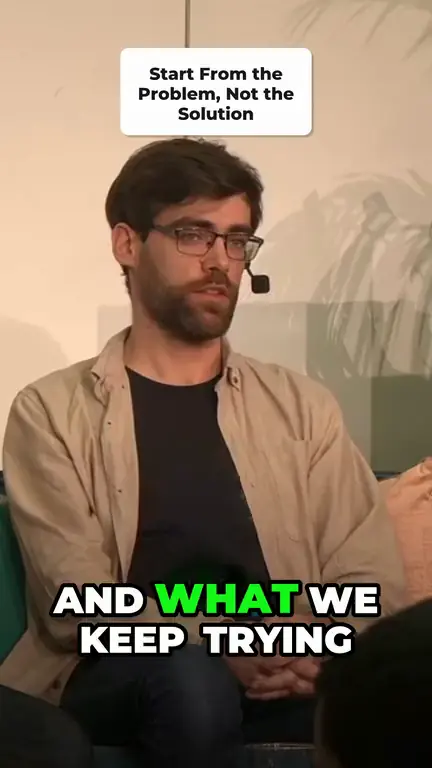 Start From the Problem, Not the Solution
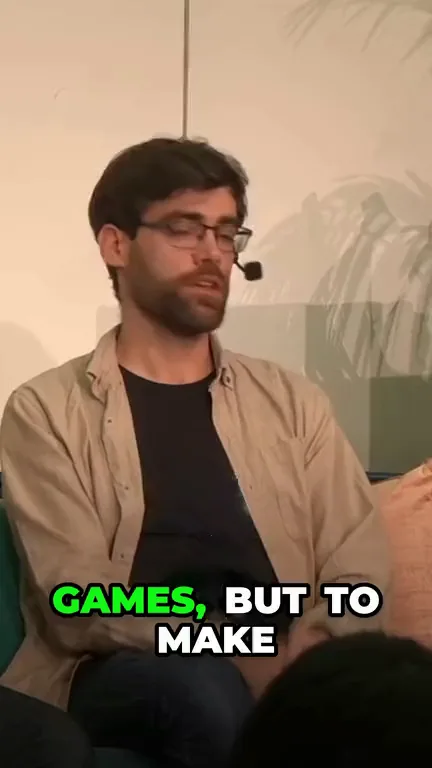 Can Godot Become a AAA Engine?
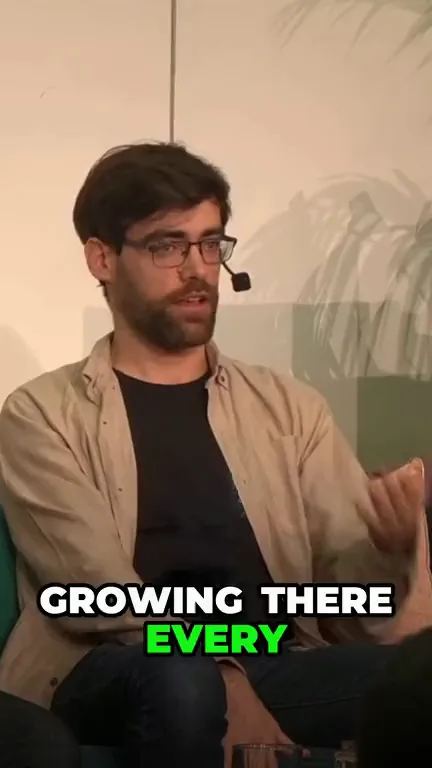 Godot Steam Releases Grow 60% a Year
Your call
Check each clip, rewrite its title card if you like, and download it for Shorts, Reels or TikTok.
Clips from “Fireside Chat: Godot's Next Milestones” by Ben Vehling, Matt Ellis and Rémi Verschelde, GodotFest 2025 (media.ccc.de, CC BY 4.0), cut, reframed and captioned by Snipri, with the logos on the speakers' shirts painted out.
Widest 9:16 crop of a 16:9 frame, in source pixels, for a clip 1,080 wide
Video pages are fetched at up to 720p. An uploaded file keeps its own resolution, for a sharper crop.
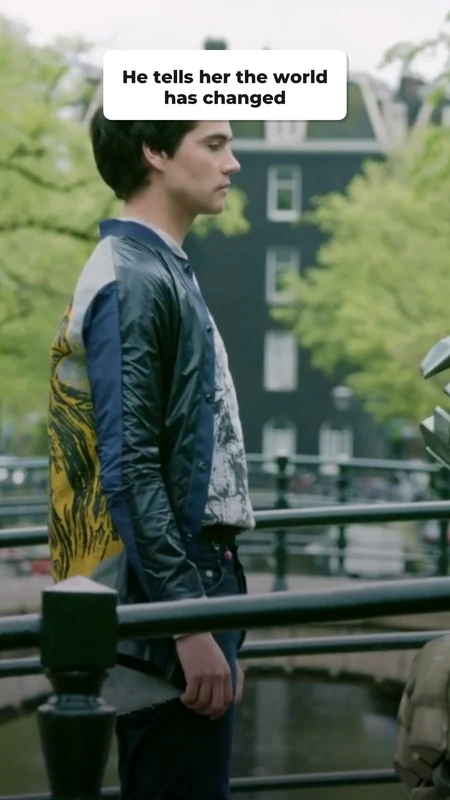
A scene from “Tears of Steel” by Blender Foundation, CC BY 3.0, reframed by Snipri under a title written for this example.
Each clip opens on a title you can rewrite and hold on screen for 1 to 10 seconds.
Example scores. The first three must reach 7.
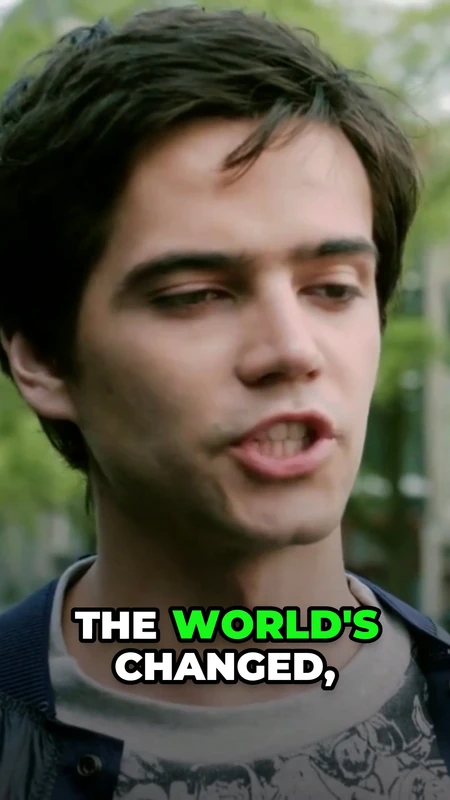
A scene from “Tears of Steel” by Blender Foundation, CC BY 3.0, cut for this example, reframed and captioned by Snipri.
Each clip shows its scores. Hook, payoff and standalone sense must each reach 7/10.
Moments that work without the rest of the video.
The transcript of your YouTube video is read for moments a viewer would follow on their own, up to 10 of them, each with the reason it was kept.
How Snipri picks each clipYouTube's 16:9 made 9:16.
The crop follows the person on camera from shot to shot, and two or three people sharing a shot can get a pane each.
How auto reframe worksCaptions for a feed scrolled on mute.
Every word is timed from the video's transcript and captioned in the language it was spoken in, one of the 25 Snipri transcribes.
How animated captions workRewrite the title card, trim or extend a clip, and add your channel's handle as a text layer.
Restyle the captions, add a hook title, B-roll or music, and save it again. Edits never use another video.
Up to 10 extra seconds before and after each moment, from the part of the video Snipri processed.
Press a word to cut it from the clip.
1.6 seconds
4 words, nothing cut yet
Sample clip: “The world’s changed, Celia”
A scene from “Tears of Steel” by Blender Foundation, CC BY 3.0, cut for this example and reframed by Snipri. Its words are the film's own captions.
A real job: this lecture, run through Snipri with Academic as the kind of video and every other setting at its default. Snipri's AI scored 38 moments in it, and 16 of them cleared the bar: hook, payoff and standalone sense each reached 7 out of 10. It kept the ten strongest, the most clips one job returns. They are listed strongest first, in the order My clips gives them. The four strongest of those that missed it are under the clips, with the score that kept each one out.
Recording: “Reverse Engineering Life: A teardown of the DNA source code of a whole bacterium” by bert hubert, WHY2025 (CC BY 4.0, via media.ccc.de), processed in Snipri.
7:43 to 8:34, 50 seconds
Gives a concrete size, then the result: upload the file to a DNA printer, put it in a human cell, and it generates the virus from scratch, from a floppy. The claim, mechanism and punchline stay together.
41:00 to 41:58, 58 seconds
A discovery arc: 20 years of dismissing the spacers as random, then someone recognizes them as viral DNA, revealing a bacterial immune system stored as a virus signature file. The reveal and the explanation both land inside the clip.
5:12 to 6:07, 54 seconds
Starts with the surprising universality of DNA, shows consequences (viruses inject it, bacteria make our insulin), and lands on the contrast with unreadable ten-year-old DVDs. It is complete and quotable.
39:33 to 40:04, 31 seconds
A specific, alarming bug explained in one breath, then the punch: your disease might be beyond the malformed line, and it took nine years to close the pull request. The stakes make it work alone.
2:51 to 3:18, 27 seconds
A self-deprecating credential check that builds from a blunt question to a punchline: maybe I'm not a scientist, but I fool a lot of people. It is self-contained and lands on a quotable line.
3:34 to 4:08, 34 seconds
A single comparison: human storage versus DNA in density and durability, ending on the 200,000-year versus two-year SSD contrast. The numbers carry the payoff with no outside context needed.
9:09 to 9:45, 36 seconds
Sets an expectation, breaks it ($30 million, nothing worked), then explains the cause: an unknown antiviral mechanism chopped up the new DNA. It ends on the line that truly knowing something means bootstrapping it.
19:12 to 19:51, 39 seconds
Poses a concrete inefficiency, then resolves it with the real reason: the N for unknown bases cannot fit in two bits. Clear question, explanation and wry ending.
33:37 to 34:21, 44 seconds
A programmer's rant with a concrete case: a file format mixing space, tab and semicolon delimiters, then one-based addressing as the original sin that causes mountains of bugs. It has a clear build and a sharp ending.
43:16 to 44:13, 57 seconds
A clean question and answer: using the malware-signature analogy, the bacteria only match when an extra implicit sequence follows, so their own signature file is spared. The paradox, mechanism and conclusion are all in the span.
9:46 to 10:40, 54 seconds
Left out on its standalone sense: 6, under the bar of 7.
A debugging story with a clean resolution: one missed letter shifts every instruction because DNA has no addressing, and the fix brings the cell to life. It starts mid-story, so it relies on the prior setup of an emptied bacterium.
24:08 to 25:00, 52 seconds
Left out on its hook and standalone sense: 6 each, under the bar of 7.
Extends the parity mystery to longer strings, then delivers the sharp payoff of asking biologists why. They say it's completely logical, then can't explain it.
15:22 to 16:17, 55 seconds
Left out on its standalone sense: 6, under the bar of 7.
Escalates from 14 MB for a plant to 750 MB for a human to a fish with 33 GB, and admits we don't know why. The escalation gives it shape, though it leans on slide references like this human and this fish.
32:06 to 32:54, 47 seconds
Left out on its standalone sense: 6, under the bar of 7.
Presents the genetic code as a table that has not changed in four billion years, with only tiny variations, and calls it a super Rosetta Stone. The opening joke and codon concept assume a little biology.
Links to one public YouTube video or Short, up to 1 hour long. Playlists and channels are not supported, and neither are private or members-only videos or streams that are still live. Only import videos you own or have permission to use.
A link is fetched at up to 720p, while an upload keeps its own resolution, and a vertical crop keeps about a third of a wide frame's width. An upload can also run longer: up to 1 hour on Free, 2 hours on Starter and 3 hours on Pro and Scale.
No. You download the clips and post them yourself, so nothing is published from your account.
From the 53-minute lecture on this page, “Reverse Engineering Life: A teardown of the DNA source code of a whole bacterium” (WHY2025), Snipri's AI scored 38 moments and kept ten, from 27 to 58 seconds long: the strongest of the 16 that cleared the bar, since one job returns at most ten. Each one comes with its five scores and the reason it was kept.
Because hook, payoff and standalone sense are each a gate of their own. In this lecture, “The One Missing Letter That Bricked a Genome” scored 8 for payoff, but its standalone sense scored 6, under the bar of 7, so it was left out. A high score on one never makes up for a miss on another. And when more moments clear the bar than one job returns, as 16 did here, only the ten strongest become clips.
You start with 2 free videos of up to 1 hour each, once, with a watermark and no credit card. Paid plans start at $29.90/month for 10 videos a month, each up to 2 hours, without a watermark. A video counts once for each hour of it, rounded up, and only when it gives you at least one clip.
Turn a full video podcast episode into captioned podcast clips for TikTok, Reels and Shorts. Snipri keeps only the moments that make sense on their own.
Cut long interviews into captioned interview clips for TikTok, Reels and Shorts. Snipri keeps answers that stand on their own and frames the speaker vertically.
Turn recorded webinars, talks and live sessions into captioned webinar clips for TikTok, Reels and Shorts. Snipri keeps only the points that stand on their own.
A YouTube Shorts maker for long videos. Snipri picks the moments that stand alone, reframes each one to 9:16, captions every word and hands back Shorts to post.
The current length limits for Shorts, the copyright rule past one minute, and how to plan a clip's length.
Upload one of your YouTube videos and judge the clips yourself. Your first 2 videos are free, up to 1 hour each, no credit card needed.